
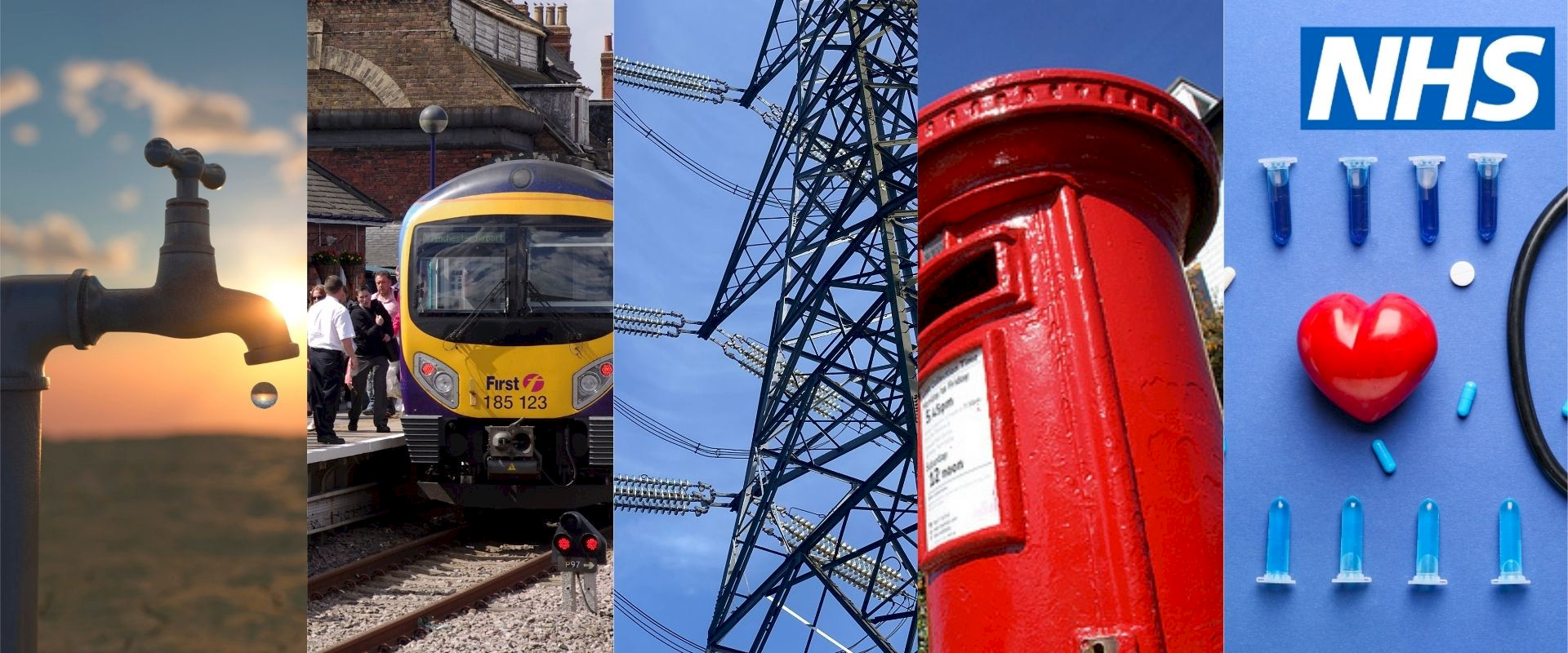
PUBLIC OWNERSHIP IS AFFORDABLE

Public ownership is affordable - here’s how

We can’t afford to carry on ripping off households with the wasteful privatisation of essentials. Bringing public services and assets into public ownership will save money and deliver a better deal.

Privatisation wastes money because private shareholders take out dividends instead of reinvesting profits back into a better service. Privatisation also costs more because it is more expensive to borrow in the private sector than through public debt. And it leads to inefficiencies like fragmented services and negative impacts like cutting corners on the quality of services.

It’s time to end the rip off! But how we can afford public ownership?

Public ownership is affordable - zero or low net cost - through a combination of:
1) Insourcing contracts and creating new publicly owned organisations

No shareholders need to be compensated in these cases:

  • Insourcing contracts wherever possible as they come up for renewal, as the government has already done with rail franchises. The Starmer government promised “the biggest wave of insourcing in a generation” before getting elected. This could be delivered across local and national government, building up public sector capacity and expertise instead of relying on private, profit-making companies. The government should be looking to get a better deal by ending Private Finance Initiative contracts in health, education and prisons.
  • Creation of new publicly owned organisations like Great British Energy, which the government set up in public hands, with no need to compensate shareholders because there were none. The government could create a retail wing for Great British Energy so that households can buy directly from a publicly owned energy company and benefit from cheaper bills. It could also create other new publicly owned companies, for example municipal bus companies in every city region and a new company to own the trains (“rolling stock”) on our railway. The government could help local authorities to set up local, publicly owned care companies. There are set up costs involved but the benefits outweigh them as these companies boost the economy, keep wealth in the UK and profits can be reinvested instead of leaking out.

2) Regulating to make privatisation less profitable

If private companies can’t make a profit, they will back off, leaving the public sector to take over:

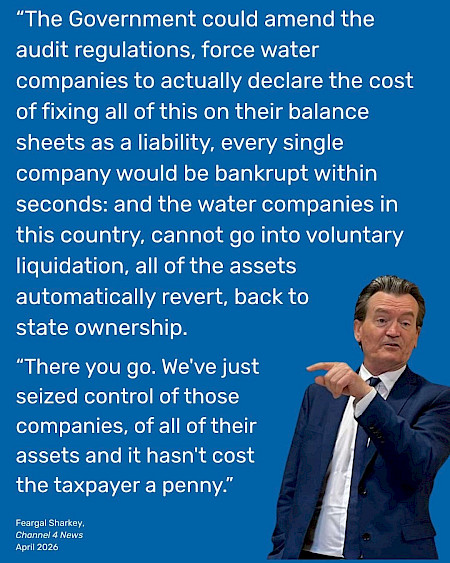
  • Regulation of the private sector to hold it accountable for failing to invest or deliver, for example forcing utility companies to account for their neglect and damage to essential infrastructure on balance sheets.
  • If private companies are required to invest more, their profit margins will reduce. Or they may find that public services aren’t profitable when the necessary investment is being made. The government can then step in with a publicly owned alternative and put UK households first.
  • A new fair wages resolution so that outsourced workers have the same terms and conditions as public sector workers, making it possible for example, for NHS trusts to be able to run care services.

3) Using legislation to defend the public interest

The government should be stepping in to use the law as a tool to deliver public ownership as quickly as possible:

  • Normalising the licences of water and energy networking companies which currently have 25 year notice periods(!); reduce these, for example to three months, in line with rail companies under franchises.
  • Use of legislation and legal procedure like special administration to defend the public interest, as when the Blair government nationalised Railtrack and stood up to shareholders. Privatisation has failed to deliver the promised investment so the government should be standing up to the private companies and their shareholders who have ripped us off. Compensation levels are agreed in court and they can take account of how these companies have performed and how much money they have extracted from us over the years.
  • Expanding the scope of the British Steel legislation to cover all critical national infrastructure that supports the economy, and communicating clearly about which services and assets fall under this category, and which do not.
4) Buying back public assets to increase revenue streams

Owning assets is the same as owning wealth. If the public sector owns wealth this makes our country richer. Money from bills and fares can be reinvested for better services and/or lower costs can be passed on to households to reduce the cost of living. The government should recognise this fact and invest in buying back assets on behalf of us all:

  • Accounting that correctly recognises the money saved by acquiring profitable assets which have a guaranteed revenue stream from our bills. For example, research shows that bringing the privatised water companies into public ownership could cost as little as £14.5 billion, according to the Financial Times, and would create savings of £3 billion to £5 billion a year. Research shows public ownership of energy networks would save around £3.7 billion a year.
  • Some public services support the economy but they require government investment to work properly. In these cases, it’s still a much better deal for the public purse if they are in public hands. For example, public ownership of rail will save around £1 billion a year. Bringing the trains (“rolling stock”) into public ownership as contracts come up for renewal would save millions in profits. Public ownership of buses would save £506 million a year.
  • Understanding of the wider context in terms of the current level of national debt (£2911 billion); the money spent on bank bailouts in 2007-9 (£137 billion); and the pandemic (£310 to £410 billion). In comparison, Thames Water’s £17 billion debt (which could be further reduced by a debt haircut of upwards of 40%) would be considered ‘trivial’ by the bond markets, as would the cost of around £3.6 billion to buy back Royal Mail.
  • Bond market reforms that increase options for the government to buy assets, for example changes to the way the Bank of England works or requirements for UK pension funds to invest in gilts, as proposed by economics professor Daniela Gabor.
  • After 40 years of privatisation, taking back our public services and assets is no small task. These policies will take time to implement and will need to be delivered in a sensible order. However the tools above show that the government can and must choose to end the rip off in the national interest, and we know the public will support them for doing so.

Share this page