Rail unions and campaigners welcome Heidi Alexander’s move to look at publicly owned trains
28 Sep 2026
Source: leftfootforward.org
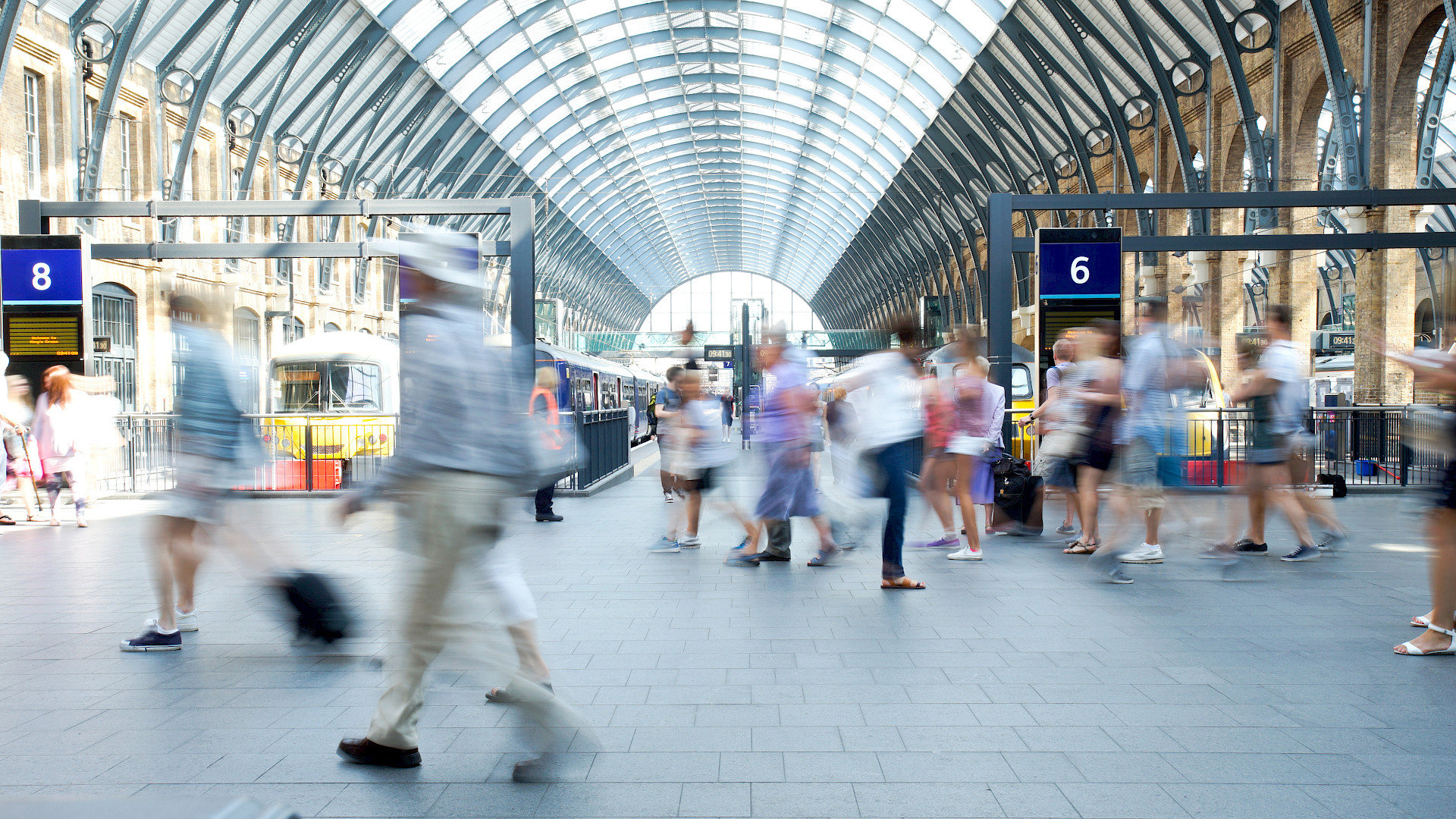
You don't get a choice about which train you take. As you're waiting on the railway platform, there's only one route and you can't choose which train company to use. So the idea that you're a 'customer' really doesn't help you as your fares increase, carriages get more crowded and the train companies rake in the profits at your expense.
The Labour government is now bringing train operating companies (TOC) - the companies that run the trains in our railway - into public ownership. With the nationalisation of London Northwestern Railway and West Midlands Railway in January 2026, more than half of TOCs are now in public ownership.
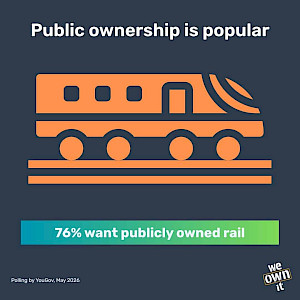
Our railway was privatised from 1994-1997, following the passing of The Railways Bill in 1993. Margaret Thatcher herself didn’t want to privatise British Rail, but her successor John Major decided to go ahead.
In November 2024, the Labour government passed the Passenger Railway Services (Public Ownership) Act, bringing all of Britain's railway services into public ownership when their current private contracts expire.
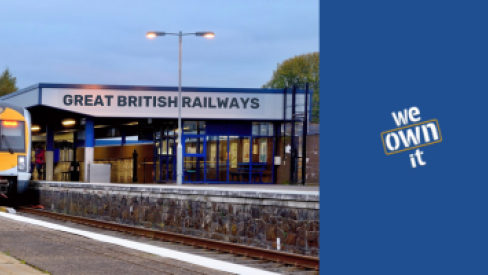
In November 2025, the government tabled the Railways Bill, which will create Great British Railways (GBR), a public owned company that will bring together track and train and own our railway. The bill does not include ownership of rolling stock.
Today private train operating companies run 6 franchises across our railway. Ironically, some of them are actually state owned companies from other countries which operate as private sector companies here and return a profit back home. For example, Arriva is owned by the German government’s national railway company, Deutsche Bahn,and Abellio is owned by the Dutch state.
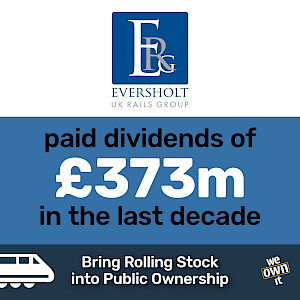
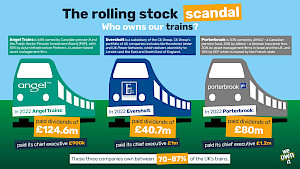
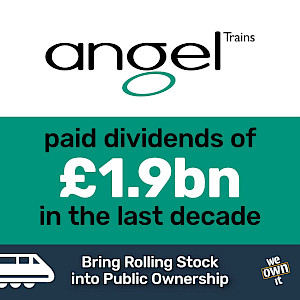
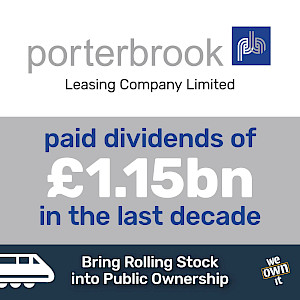
Three ROSCOs (Rolling Stock Companies) own and lease the trains themselves. Network Rail (which is publicly owned) manages the track and some of the stations.
The infrastructure itself was originally put under control of privatised ‘Railtrack’ – but after fatal accidents, publicly owned Network Rail took over in 2002.
The railway is partly funded by the fares we pay, and partly by the government. Some rail fares are regulated by the government (like season tickets and off peak fares) and some are not (like advance and walk on fares).
Why is the railway important?
The railway is important for the economy, society and the environment. Rail is good for the economy - for every £1 of activity spent on rail, a further £2.50 of income is generated elsewhere in the economy. 1 in 5 households don’t have a car so they rely on public transport to get to work or leisure activities.
And tackling the climate crisis means making public transport easy for people so they can leave cars and planes behind. If you’re travelling from Glasgow to London, rail is the green option, producing around 18% of the carbon emissions of a plane journey and around 32% of the emissions of a car journey.
Are rail fares expensive in the UK?
Yes! Overall rail fares are up by at least 20% in real terms since privatisation. Some rail fares have even risen twice as fast as inflation. For example, in 1995 the price of a peak-time single ticket from London Paddington to Bristol was £28.50 - now it can get as high as £110. Analysis by Barry Doe shows that some fares have risen by over 300% since privatisation.
Between 2009 and 2019, rail fares increased at twice the speed of wages, TUC analysis shows. In 2022, fares in England and Wales rose by 3.8%: their biggest increase in nine years.
Rail fares are also horrendously complicated - although the industry says it is working on making the system simpler, there are currently 55 million different fares!
Rail companies say that fares here compare well to elsewhere in Europe - what’s the truth?
Everyone agrees we have the highest walk-on fares in Europe.
This question often arises with advance fares. Recent research by Transport & Environment looked at 8000 advance (booked between 7 and 28 days) fares across Europe. It found our fares are the highest in Europe.
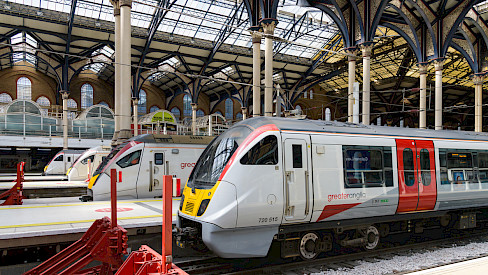
Great Western Railway fares are two-and-a-half times higher than the average across European Union (EU) and Swiss operators for routes of similar lengths
Avanti West Coast passengers pay one-and-a-half times more.
Why are UK rail fares so expensive?
There are three main factors - inadequate government funding, inefficient fragmentation and shareholder profits leaking out of the system.
Privatisation is a key reason why fares are so high. This causes two problems:
Alongside a fragmented, privatised railway, lack of government funding is another important reason why fares are so high. The railway is partly funded by fares and partly by government. The UK is uniquely obsessed with loading the cost onto passengers, with the government forcing passengers to pay more so it can pay less, whereas continental European countries understand the benefit of higher public funding. Our government is being short-sighted by cutting funding - as mentioned above, investing in the railway boosts the economy overall. It pays for itself!
Do shareholders really make much money from the railway?
The Train Operating Companies themselves get a relatively low rate of return in terms of the profit they make. Between 2019-20 and 2024-25, they, combined, made £155 million on average per year.
However, there are a few points to bear in mind:
How would public ownership of the railway help passengers?
Overall, we waste around £1.5 billion a year on privatisation. If that money was put towards rail fares, we could cut them by 18%, or we could build 100 miles of new railway track.
In addition, we could plan for a railway fit for the future. A more efficient, well planned, publicly owned railway will help people leave cars and planes behind and help tackle the climate crisis. As Jonathan Tyler points out, public ownership would make it easier to coordinate a public transport timetable across the whole network.
Which rail franchises are already run in public ownership in the UK?
The ‘Operator of Last Resort’ is run by the Department for Transport, and takes over railway franchises when train operating companies fail to run services. This provides a fall back option for when privatisation goes wrong. Wales and Scotland have the devolved powers to run their railway directly, and both countries have now chosen to do this.
What about British Rail? Do you want to take us back to the 1970s?
We want to go forward to the future, not back to the past! That being said, it’s important to set the record straight. Supporters of privatisation like to criticise British Rail, but it was actually very efficient by the time it was privatised. In 1989, British Rail was recorded as being 40% more efficient than eight comparable rail systems in Europe used as benchmarks.
The truth is that British Rail was also hugely underfunded. Since privatisation, the government is spending around three times more on the railway. We need BOTH public ownership AND proper funding to have a railway fit for the future.
Christian Wolmar points out that in other countries like France and Germany, government owns the railway but it is managed by professionals who are given the freedom they need to attract passengers.
It doesn’t make sense to pretend our railway can be run like a market when it’s a natural monopoly. But under public ownership, we will still need mechanisms to make sure it’s delivering. In our report ‘When We Own It’, we make the case that passengers need a voice to hold railway managers accountable and keep pushing for services to be as high quality as possible. We suggest a governance model that gives passengers a say alongside professional managers and rail workers.
Passenger numbers have increased since privatisation - doesn’t that mean it was a success?
Passenger numbers have increased despite privatisation, not because of it. There are demographic and economic factors driving this.
Especially before the pandemic, many people had to commute into London, Birmingham, Glasgow and other metropolitan hubs. People often have limited transport options, meaning they don’t have much choice but to pay the high fares. But public ownership could make the railway a real choice for many more people and help us move away from cars and planes. Since the pandemic, working patterns are changing and leisure travel is becoming more important in relative terms.
Rail has also improved in some ways because - the government spends far more than in British Rail days (see our ‘What about British Rail’ section above).
What about Japan? They have a good railway and it’s privatised
That’s true. Japan is a unique example. Unlike in other countries, most railways in Japan are financially independent and make a profit, rather than having to be subsidised. Its geography means that the rail network is dense and people have to rely on public transport. Punctuality is ingrained in Japanese culture. Japan has six separate geographical vertically integrated railways. Crucially, rail companies actually own the land around the railway and have diversified beyond just providing rail travel. They are in charge of housing and industrial development, shopping centres, hotel management, tourism and other modes of transport. For example, in JR East, one of Japan’s six railway divisions, more than 47% of its revenue came from non-rail related activities such as hotels. In any case, we would argue that the railway is an essential public service and public ownership is the best way to make sure it’s working well for everyone.
Which country should we copy?
Switzerland has the best railway in Europe. Swiss Federal Railways is a publicly owned rail network which is planned as part of a comprehensive, integrated public transport system where every village can rely on inter-connected, high quality services. The railway was ranked first among national European systems in the 2017 European Railway Performance Index for its intensity of use, quality of service, and safety rating.
Has rail improved when franchises have come in house?
Often rail franchises have improved when they are brought into public ownership.
For example, between 2009 and 2015 the East Coast line was run in public ownership after National Express walked out on the contract. In public ownership, the franchise was rated the most efficient in the UK - it required less public subsidy than before and was able to pay back £1 billion to the Treasury. It also achieved a customer satisfaction rate of 94%. Since the pandemic, publicly owned LNER has invested millions to improve services for passengers in innovative ways.
However, there are a few reasons why bringing isolated franchises into public hands might not always lead directly to an improvement in services:
How would you make sure that the government doesn’t starve a publicly owned railway of cash?
Investment is vital. Public ownership makes sense because it’s more efficient but it’s crucial to have a government that understands the value of the railway and invests the way that other countries on the continent do. We need to make the case for ongoing investment in public transport and show that this is a popular and sensible policy.
For public services like rail which have some revenue, but not enough to cover the cost of providing the service to everyone, their funding will have to be supplemented by the Treasury. There are two ways to deal with this.
Firstly, we can have legislation that recognises the need for long term funding from government. Railway privatisation legislation put an obligation on the Transport Secretary to provide the private railway with a multi-year funding settlement. Even though it doesn’t say anything about how large the settlement should be, this has given the privatised railway financial security. British Rail never benefited from such settlements. Similar guarantees could and should be put in place as part of legislation for the future publicly owned network.
Secondly, more generally, we must fund public services properly. Public ownership is not a panacea and public services will not work well without adequate funding, whoever owns and runs them. Austerity has created terrible conditions for our public services.
The UK’s public spending is about 41% of our GDP – much lower than the average for similar European countries, which is nearly 49%. We rely on public services to have a good quality of life; they are the backbone of societies across the world. It’s time to recognise the short and long term value of investing in them.