2 Apr 2026
1) Water is a profitable asset with a revenue stream
Water is a profitable asset with a guaranteed revenue base - the households who pay the bills. If the government buys this profitable asset, it will get a profitable asset in return.
A third of our water bills is now spent on dividends and debt. Our bill increases are paying for privatisation to continue. We will pay at least £22 billion over the next 5 years (or £366 million extra every week) for the privilege of having our water in private hands.
EVEN IF the government compensated all privatised water companies at a cost of £90 billion, research from University of Greenwich shows this would still be a good deal for the public purse. It would create revenue of £3 to £5 billion a year.
2) Nationalisation is a simple process we have done before
The UK nationalised companies after World War 2. This was done by paying the shareholders with government bonds. The government would not be paying in cash or from existing budgets but with new debt. The national debt rises in value over time and the government can extend the bonds. Revenue from bills covers the interest payments on the bonds.
The government is scared about how the bond markets might respond to such a policy but the bond markets want clarity and certainty. Given that 9 out of 10 countries run water in public ownership, it is reasonable for our government to do the same.
3) The shareholders deserve nothing
However, the shareholders don’t deserve the level of compensation mentioned above because they have invested less than nothing in terms of their own money in the companies since water privatisation in 1989.
The shareholders have received £85 billion in dividends. They have racked up £65 billion in debt at our expense after starting out with zero debt. 70% of these shareholders are in countries around the world while English households pay through the nose.
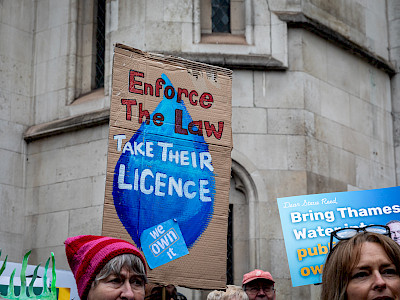
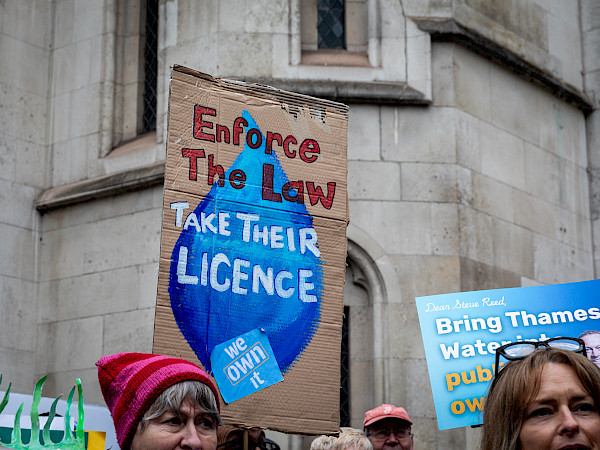
The government has the power to withdraw licences from water companies if they are financially insolvent - like Thames Water. Or if they aren’t fulfilling their statutory duties - for example South East Water failed to provide water to 30,000 homes.
If a water company loses its licence, it goes into “Special Administration”. This is like going bust. The only reason water companies aren’t allowed to just go bust (i.e. regular administration) is to protect the public. The taps and sewage systems must keep running. If a water company loses its licence, shareholders do not need to be compensated.
Government has the power to defend the public interest, as it did when Railtrack went bust.
4) Neglect and damage to our infrastructure must be paid for
Appropriate compensation is decided based on “fair value”. The shareholders have racked up £65 billion of debt and neglected the infrastructure. This means billions of further investment is required to stop sewage and leaks. A lot of money now needs spending to sort out the mess.
The government can force water shareholders to pay for this mess. How? Feargal Sharkey says the government must force water companies to declare the cost of fixing the mess on their balance sheets, as a liability. The water companies would then go bust and we could take them into public ownership.
Professor Dieter Helm says “There is no obvious reason why the state should double pay, taking on both the additional liabilities and hence the remedial capital maintenance and paying the value of the RCV and taking on all the existing debt liabilities.”
Others agree. The People’ Commission explains that the state of the infrastructure they have left behind must be accounted for. Richard Murphy describes the water companies as “environmentally insolvent” because they wouldn’t have enough money if they had to clean up the mess. Law professor Ewan McGaughey argues for Common Wealth that we would ideally force these companies to pay for the damage they’ve caused i.e. they should compensate US, the public.
5) “Market value” doesn’t exist - government regulation decides how profitable the water companies are
Water is a natural monopoly. There is no choice for consumers, no market. Government regulates the water companies - it decides the framework they operate in and how profitable they can be. If the companies become less profitable, they lose their value. For example, the government could
- Say no to bill increases and force companies to invest
- Pass legislation giving notice to privatised water - they have 25 year notice periods!
- Make the water companies pay the UK public in shares instead of fines so they gradually come into public ownership
- Simply pass legislation now to introduce public ownership
The value of the companies would fall in all of these cases.
6) Debt will cost less in public ownership
Debt is cheaper if it is refinanced in public ownership because the interest rate is much lower - currently around 5% vs up to 9.75% for Thames Water’s recent bailout debt.
Additionally, as Dieter Helm has explained, if water companies lost their licences, the special administrator is under no obligation to protect bondholders. Banks and creditors simply need "appropriate value". The creditors would take a haircut - government has previously said this would be around 40% for Thames Water but it could be higher.
So in the case of Thames Water for example, shareholders would get nothing while £12 billion of debt or less (reduced from the current £20 billion) could be refinanced far more cheaply in the public sector, costing households much less.
7) The government’s estimate is wrong (and its decision making is compromised by private water)
The UK government hasn’t bothered to assess the cost of bringing water into public ownership, as highlighted by Barry Gardiner MP recently.
The government originally borrowed its estimate for the cost of nationalising water from a report funded by privatised water. The latest estimate from Defra (based on “Regulatory Capital Value” or RCV) is divorced from reality. According to this estimate, Thames Water is worth £21 billion, yet shareholders didn’t want to pay £4 billion for the company. Existing shareholders have written down their stakes and walked away.
The government said it was holding the largest review of the water industry since privatisation but it didn’t allow this review to look at the option of public ownership. The government has met with the private sector 23 times more than consumer groups and charities. Given that Peter Mandelson’s company Global Counsel was working for private sector body Water UK, the government’s whole water policy should now be in question.